
MAITREYA
INCREDIBLE
ART(delivering
Perfection)
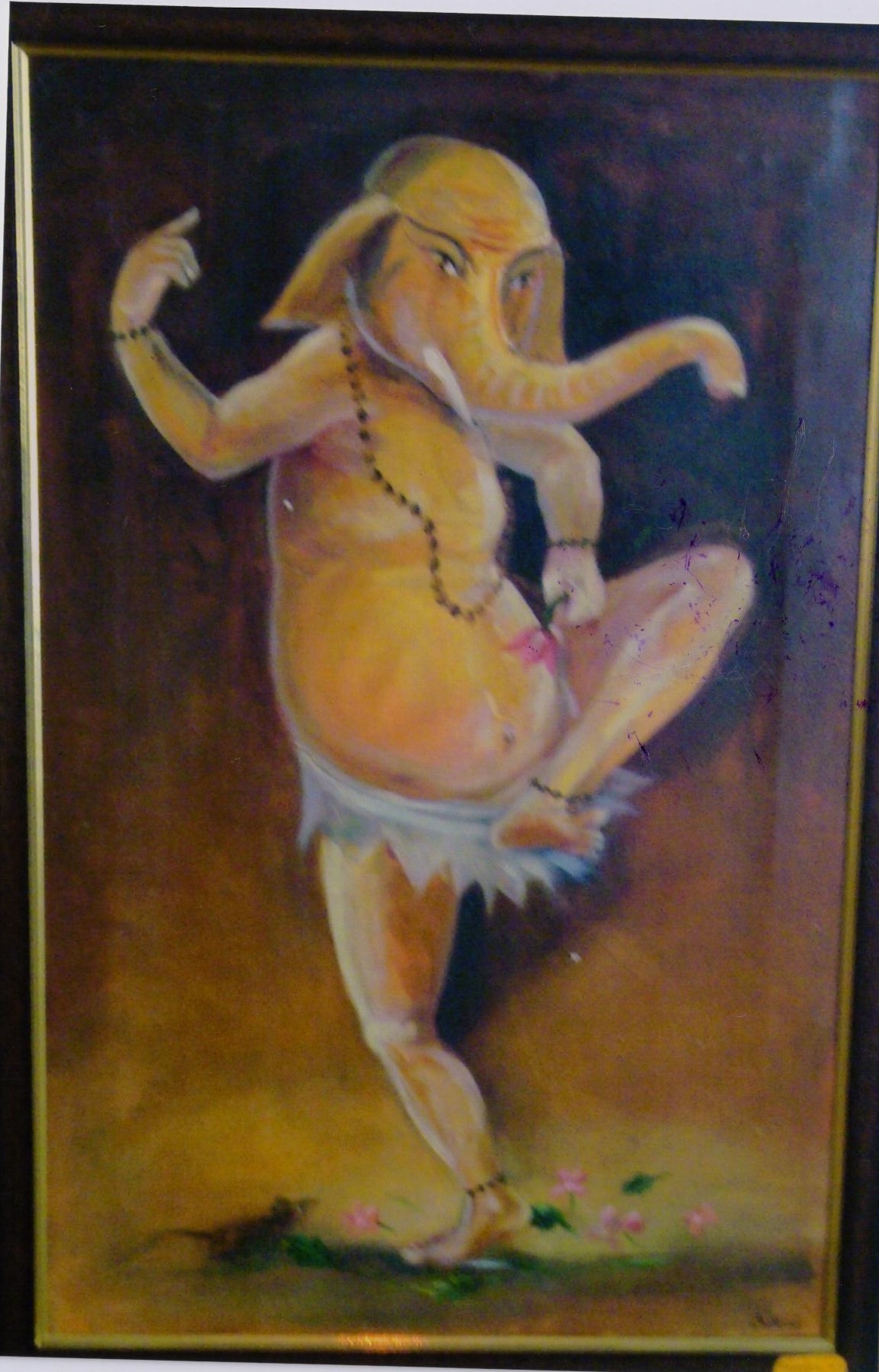
SIZE : 24*15 CMS
PRICE ON
REQUEST
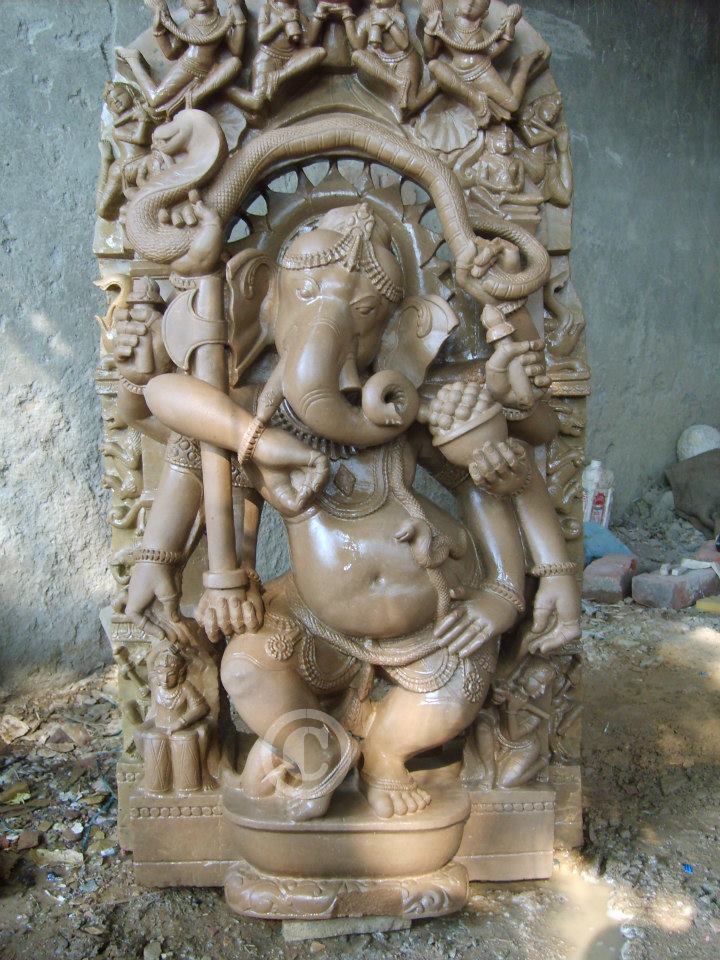
SIZE AND PRICE ON REQUEST
MATERIAL
SANDSTONE
Ganesha (Sanskrit: गणेश; IAST: Gaṇeśa; listen (help·info)), also spelled Ganesa andGanesh, also known as Ganapati (Sanskrit: गणपति, IAST: gaṇapati), Vinayaka(Sanskrit: विनायक; IAST: Vināyaka), Vighnavinashaka, Gajanana and Pillaiyar(Tamil: பிள்ளையார்), is one of the best-known and most widely worshipped deities in the Hindu pantheon.[5] His image is found throughout India and Nepal.[6] Hindu sectsworship him regardless of affiliations.[7] Devotion to Ganesha is widely diffused and extends to Jains, Buddhists, and beyond India.[8]
Although he is known by many other attributes, Ganesha's elephant head makes him particularly easy to identify.[9] Ganesha is widely revered as the Remover of Obstacles[10] and more generally as Lord of Beginnings and Lord of Obstacles (Vighnesha (Sanskrit: विघ्नेश; IAST: Vighneśa), Vighneshvara (Sanskrit: विघ्नेश्वर; IAST: Vighneśvara),[11] patron of arts and sciences, and the deva of intellect and wisdom.[12] He is honoured at the beginning of rituals and ceremonies and invoked as Patron of Letters during writing sessions.[13] Several texts relate mythological anecdotes associated with his birth and exploits and explain his distinct iconography.
Ganesha emerged as a distinct deity in clearly recognizable form in the 4th and 5th centuries CE, during the Gupta Period, although he inherited traits from Vedic and pre-Vedic precursors.[14] His popularity rose quickly, and he was formally included among the five primary deities of Smartism (a Hindu denomination) in the 9th century. A sect of devotees called the Ganapatya (Sanskrit: गाणपत्य; IAST: gāṇapatya), who identified Ganesha as the supreme deity, arose during this period.[15] The principal scriptures dedicated to Ganesha are the Ganesha Purana, the Mudgala Purana, and the Ganapati Atharvashirsa.
Associations
The Lalbaugcha Raja Ganesha image worshipped during Ganesh Festival inMumbai, India. Ganesha is widely worshiped across India as the remover of obstacles.
Obstacles
Ganesha is Vighneshvara or Vighnaraja or "Vighnaharta"(marathi), the Lord of Obstacles, both of a material and spiritual order.[85] He is popularly worshipped as a remover of obstacles, though traditionally he also places obstacles in the path of those who need to be checked. Paul Courtright says that "his task in the divine scheme of things, his dharma, is to place and remove obstacles. It is his particular territory, the reason for his creation."[86]
Krishan notes that some of Ganesha's names reflect shadings of multiple roles that have evolved over time.[27] Dhavalikar ascribes the quick ascension of Ganesha in the Hindu pantheon, and the emergence of the Ganapatyas, to this shift in emphasis from vighnakartā(obstacle-creator) to vighnahartā (obstacle-averter).[87] However, both functions continue to be vital to his character, as Robert Brown explains, "even after the Purāṇic Gaṇeśa is well-defined, in art Gaṇeśa remained predominantly important for his dual role as creator and remover of obstacles, thus having both a negative and a positive aspect".[88]
Buddhi (Knowledge)
Ganesha is considered to be the Lord of letters and learning.[89] In Sanskrit, the word buddhiis a feminine noun that is variously translated as intelligence, wisdom, or intellect.[90] The concept of buddhi is closely associated with the personality of Ganesha, especially in the Puranic period, when many stories stress his cleverness and love of intelligence. One of Ganesha's names in the Ganesha Purana and the Ganesha Sahasranama isBuddhipriya.[91] This name also appears in a list of 21 names at the end of the Ganesha Sahasranama that Ganesha says are especially important.[92] The word priya can mean "fond of", and in a marital context it can mean "lover" or "husband",[93] so the name may mean either "Fond of Intelligence" or "Buddhi's Husband".[94]
Aum
Ganesha is identified with the Hindu mantra Aum (Tamil:ஓம், Sanskrit:ॐ) also spelled Om). The term oṃkārasvarūpa (Aum is his form), when identified with Ganesha, refers to the notion that he personifies the primal sound.[95] The Ganapati Atharvashirsa attests to this association. Chinmayananda translates the relevant passage as follows:[96]
(O Lord Ganapati!) You are (the Trinity) Brahma, Vishnu, and Mahesa. You are Indra. You are fire [Agni] and air [Vāyu]. You are the sun [Sūrya] and the moon [Chandrama]. You are Brahman. You are (the three worlds) Bhuloka [earth], Antariksha-loka [space], and Swargaloka [heaven]. You are Om. (That is to say, You are all this).
Ganesha (Devanagari) Aum jewel
Some devotees see similarities between the shape of Ganesha's body in iconography and the shape of Aum in the Devanāgarī and Tamil scripts.[97]
First chakra
According to Kundalini yoga, Ganesha resides in the first chakra, called Muladhara(mūlādhāra). Mula means "original, main"; adhara means "base, foundation". The muladhara chakra is the principle on which the manifestation or outward expansion of primordial Divine Force rests.[98] This association is also attested to in the Ganapati Atharvashirsa. Courtright translates this passage as follows: "[O Ganesha,] You continually dwell in the sacral plexusat the base of the spine [mūlādhāra cakra]."[99] Thus, Ganesha has a permanent abode in every being at the Muladhara.[100] Ganesha holds, supports and guides all other chakras, thereby "governing the forces that propel the wheel of life".[98]
Ganesha (Sanskrit: गणेश; IAST: Gaṇeśa; listen (help·info)), also spelled Ganesa andGanesh, also known as Ganapati (Sanskrit: गणपति, IAST: gaṇapati), Vinayaka(Sanskrit: विनायक; IAST: Vināyaka), Vighnavinashaka, Gajanana and Pillaiyar(Tamil: பிள்ளையார்), is one of the best-known and most widely worshipped deities in the Hindu pantheon.[5] His image is found throughout India and Nepal.[6] Hindu sectsworship him regardless of affiliations.[7] Devotion to Ganesha is widely diffused and extends to Jains, Buddhists, and beyond India.[8]
Although he is known by many other attributes, Ganesha's elephant head makes him particularly easy to identify.[9] Ganesha is widely revered as the Remover of Obstacles[10] and more generally as Lord of Beginnings and Lord of Obstacles (Vighnesha (Sanskrit: विघ्नेश; IAST: Vighneśa), Vighneshvara (Sanskrit: विघ्नेश्वर; IAST: Vighneśvara),[11] patron of arts and sciences, and the deva of intellect and wisdom.[12] He is honoured at the beginning of rituals and ceremonies and invoked as Patron of Letters during writing sessions.[13] Several texts relate mythological anecdotes associated with his birth and exploits and explain his distinct iconography.
Ganesha emerged as a distinct deity in clearly recognizable form in the 4th and 5th centuries CE, during the Gupta Period, although he inherited traits from Vedic and pre-Vedic precursors.[14] His popularity rose quickly, and he was formally included among the five primary deities of Smartism (a Hindu denomination) in the 9th century. A sect of devotees called the Ganapatya (Sanskrit: गाणपत्य; IAST: gāṇapatya), who identified Ganesha as the supreme deity, arose during this period.[15] The principal scriptures dedicated to Ganesha are the Ganesha Purana, the Mudgala Purana, and the Ganapati Atharvashirsa.
Associations
The Lalbaugcha Raja Ganesha image worshipped during Ganesh Festival inMumbai, India. Ganesha is widely worshiped across India as the remover of obstacles.
Obstacles
Ganesha is Vighneshvara or Vighnaraja or "Vighnaharta"(marathi), the Lord of Obstacles, both of a material and spiritual order.[85] He is popularly worshipped as a remover of obstacles, though traditionally he also places obstacles in the path of those who need to be checked. Paul Courtright says that "his task in the divine scheme of things, his dharma, is to place and remove obstacles. It is his particular territory, the reason for his creation."[86]
Krishan notes that some of Ganesha's names reflect shadings of multiple roles that have evolved over time.[27] Dhavalikar ascribes the quick ascension of Ganesha in the Hindu pantheon, and the emergence of the Ganapatyas, to this shift in emphasis from vighnakartā(obstacle-creator) to vighnahartā (obstacle-averter).[87] However, both functions continue to be vital to his character, as Robert Brown explains, "even after the Purāṇic Gaṇeśa is well-defined, in art Gaṇeśa remained predominantly important for his dual role as creator and remover of obstacles, thus having both a negative and a positive aspect".[88]
Buddhi (Knowledge)
Ganesha is considered to be the Lord of letters and learning.[89] In Sanskrit, the word buddhiis a feminine noun that is variously translated as intelligence, wisdom, or intellect.[90] The concept of buddhi is closely associated with the personality of Ganesha, especially in the Puranic period, when many stories stress his cleverness and love of intelligence. One of Ganesha's names in the Ganesha Purana and the Ganesha Sahasranama isBuddhipriya.[91] This name also appears in a list of 21 names at the end of the Ganesha Sahasranama that Ganesha says are especially important.[92] The word priya can mean "fond of", and in a marital context it can mean "lover" or "husband",[93] so the name may mean either "Fond of Intelligence" or "Buddhi's Husband".[94]
Aum
Ganesha is identified with the Hindu mantra Aum (Tamil:ஓம், Sanskrit:ॐ) also spelled Om). The term oṃkārasvarūpa (Aum is his form), when identified with Ganesha, refers to the notion that he personifies the primal sound.[95] The Ganapati Atharvashirsa attests to this association. Chinmayananda translates the relevant passage as follows:[96]
(O Lord Ganapati!) You are (the Trinity) Brahma, Vishnu, and Mahesa. You are Indra. You are fire [Agni] and air [Vāyu]. You are the sun [Sūrya] and the moon [Chandrama]. You are Brahman. You are (the three worlds) Bhuloka [earth], Antariksha-loka [space], and Swargaloka [heaven]. You are Om. (That is to say, You are all this).
Ganesha (Devanagari) Aum jewel
Some devotees see similarities between the shape of Ganesha's body in iconography and the shape of Aum in the Devanāgarī and Tamil scripts.[97]
First chakra
According to Kundalini yoga, Ganesha resides in the first chakra, called Muladhara(mūlādhāra). Mula means "original, main"; adhara means "base, foundation". The muladhara chakra is the principle on which the manifestation or outward expansion of primordial Divine Force rests.[98] This association is also attested to in the Ganapati Atharvashirsa. Courtright translates this passage as follows: "[O Ganesha,] You continually dwell in the sacral plexusat the base of the spine [mūlādhāra cakra]."[99] Thus, Ganesha has a permanent abode in every being at the Muladhara.[100] Ganesha holds, supports and guides all other chakras, thereby "governing the forces that propel the wheel of life".[98]